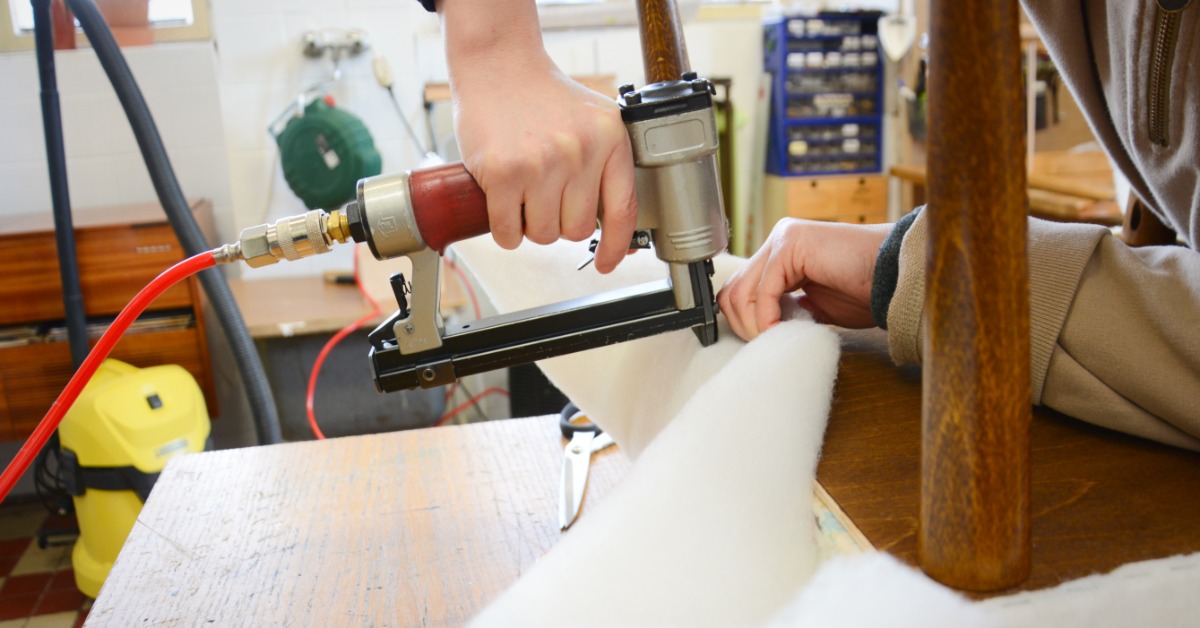
A heavy-duty staple gun can make upholstery work feel smooth, or it can turn every project into a stop-and-go mess. When staples sit proud or curl, the whole job slows down, and the finish starts to look sloppy. The fix usually isn’t “push harder,” it’s choosing a stapler that matches the way upholstery actually works. This upholsterer’s guide to heavy-duty staple guns keeps it practical, so the right tool feels obvious once the pieces click into place.
Pneumatic Vs. Electric Vs. Manual
Pneumatic staplers usually win for upholstery because they deliver consistent power and keep the pace up on repetitive work. Electric tools can handle lighter tasks, but they often struggle when materials get dense or when the job calls for hundreds of staples in a session. A manual stapler can work for quick repairs, but it turns into a hand workout fast on full furniture pieces. If you regularly do upholstery, pneumatic helps keep results tight and your hands happier.
Matching the Staples to the Work
Many “bad stapler” complaints actually start with the wrong staple length and wire gauge. Too long can poke through thin framing, curl at corners, or show through padding once the piece compresses. On the other hand, using too-short staples can loosen over time, leading to sagging fabric and annoying callbacks. A good heavy-duty staple gun still needs the correct staple series and size to look clean and hold strong.
Get Clean Drive Depth
Upholstery stacks change constantly, so you need control, not brute force. Set the air pressure to the lowest level that seats staples flush in the toughest part of the frame, then test again on the thinner areas, such as the dust cover zones. That approach keeps staples from blowing through fabric or crushing wood fibers while still holding webbing and layers tight.
Comfort And Jam Control
A stapler can shoot hard and still be a pain to use, especially when you work inside frames and around tight corners. Look for a tool that balances well in the hand and fires smoothly, because that reduces wrist strain during long stretches of stapling. Jams usually come from mixed staples, low-quality collation, or a dirty magazine, so a tool with easy access saves real time and keeps your upholstery work going.
Keep Your Staple Lines Clean
Keep this upholsterer’s guide to heavy-duty staple guns in mind when upgrading your setup. When the stapler drives flush, handles the staple sizes you actually use, and feels comfortable in tight corners, you stop fixing mistakes and start finishing faster. Get that part right, and the rest of the job starts to feel way less fussy.
Ready to stop fighting half-set staples and stubborn hardwood frames? Salco’s lineup of heavy-duty stapler for wood is built for upholstery shops that need clean, flush drives and a tool that keeps up when the pace picks up. Choose your stapler today to match your staple size and daily workload, and keep your lines tidy. Visit Salco Staple Headquarters now and get the tools built for your bench!