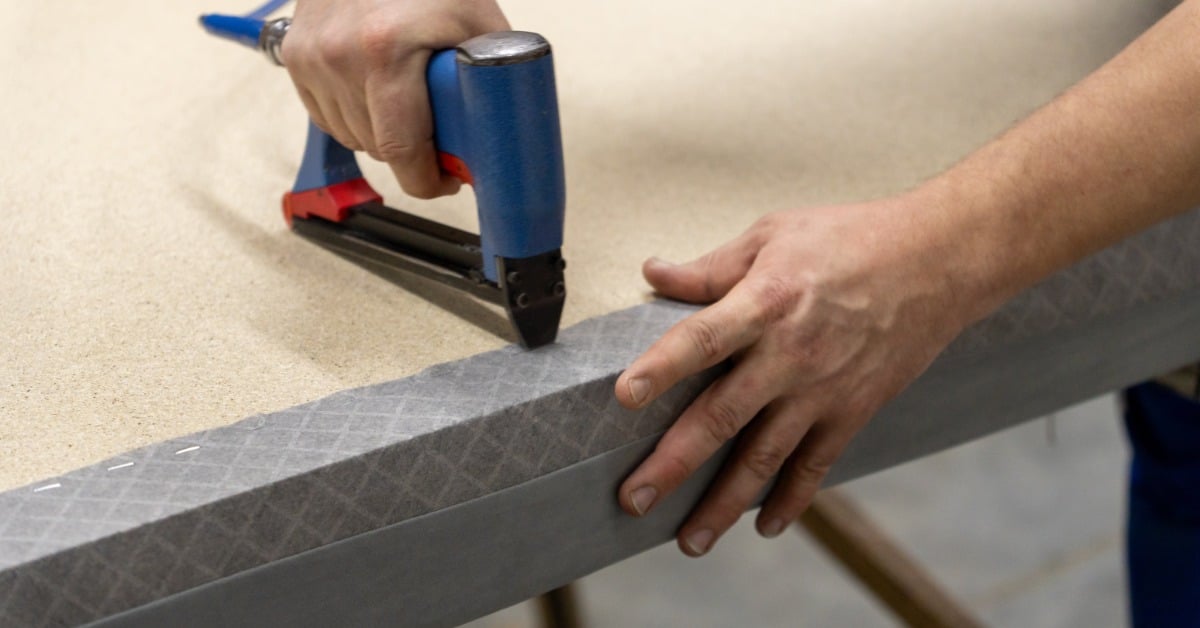
Manufacturing teams rarely staple one perfect, predictable material all day. One station might move from fabric to foam or wood-backed panels to layered assemblies before lunch. That is where hybrid material stapling becomes a real production issue, forcing teams to choose between speed and precision. The goal is simple: move fast enough to keep output up without creating crooked fasteners or rework that eats the time you just saved.
When Speed Helps Production
Speed matters when the staple line is hidden, the material stack is forgiving, and the hold requirement stays consistent. Packaging and rough assembly work can usually handle a faster rhythm if the staple size and drive depth stay dialed in. The risk comes when operators chase output and stop checking for half-set staples, crushed top layers, or weak edges. Fast stapling only saves time when the part passes the first inspection without requiring fixes.
When Precision Should Take Over
On the other hand, precision wins when the fastener area affects appearance or product quality. Upholstery panels and retail displays all need cleaner placement because customers can see or feel mistakes. A slower, steadier pace can actually protect output by preventing crooked lines and extra touch-up work. If a single bad staple causes rework, the line probably needs more control than raw speed at that step.
What To Watch on the Line
Small habits usually tell you when the setup is wrong before the defect report does. Operators may double-tap, lean harder into the tool, slow down without saying anything, or start sorting finished pieces more carefully. Those workarounds often mean the staple length or tool style no longer matches the material stack. Here is what to watch for on the production line:
- Staples sit proud in the harder layer.
- Top materials pucker, dent, or tear.
- Edges need extra shots to stay down.
- Staple lines vary between operators.
- Finished parts fail pull or handling checks.
Keep Speed And Control Working Together
Clean hybrid material stapling comes down to knowing when to move fast and when to slow the shot down. When speed and precision guide the setup, teams can match the drive depth to the material stack instead of guessing on the line. That means fewer weak holds and fewer parts coming back for rework. Once the setup feels repeatable, operators can keep the pace up without sacrificing the clean, consistent results the job needs.
Ready to stop choosing between speed and clean results? Salco is a stapler company built for real fastening work, from mixed-material production runs to jobs that need every staple to land just right. Find the staples and supplies that match your materials and workflow, then keep your line moving with fewer slowdowns and cleaner holds.