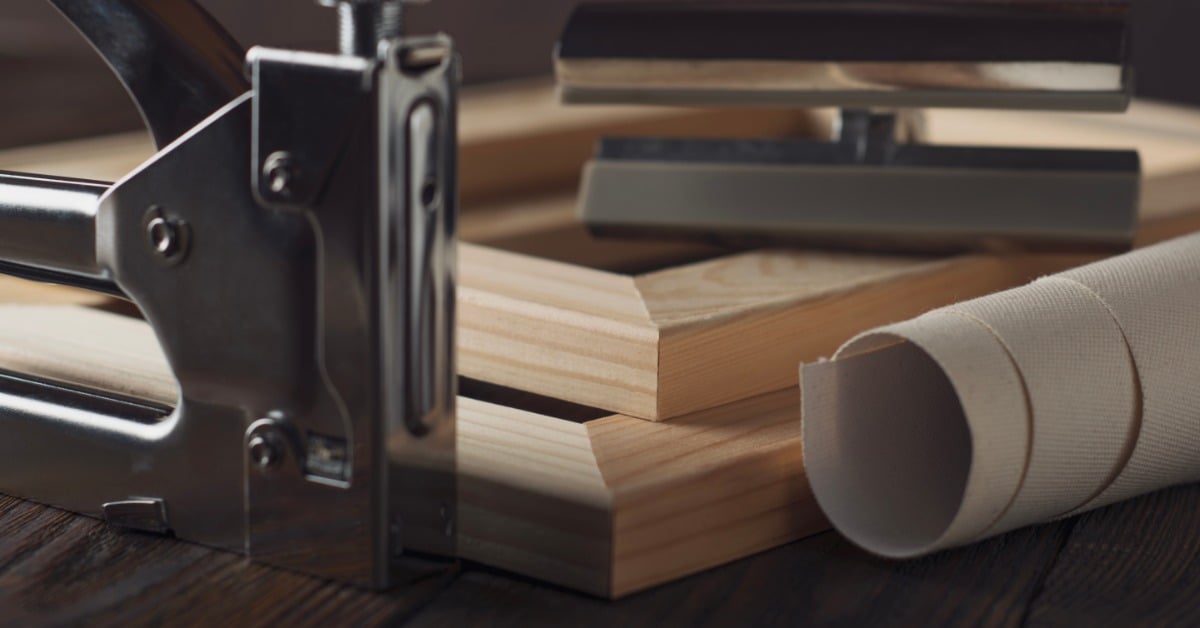
Small details keep a stretched canvas looking clean from every angle for gallery edge finishing. Fastener choice plays a big role, especially when you compare staple depth and nail setback during finishing.
Artists, framers, or production teams often ask how to secure the material without creating bumps or tension problems in the finished product. Nails have their place, but staples usually provide better control for consistent edge work.
What Staple Depth Actually Controls
Staple depth determines how far the staple goes into the stretcher bar or backing material. When the staple sits too shallow, it fails to hold tension well or sits proud. When you drive it too deeply, the staple can cut the canvas, weaken the pull, or create a tiny dip in the material. The sweet spot holds the crown snug against the fabric without crushing it. That’s why you must control staple depth when finishing gallery edges.
Why Staples Often Win On Canvas Work
Staples spread the holding force across a wider crown, so they secure the fabric without putting all the pressure on one tiny point. That wider hold especially helps when you stretch canvas, because the fabric needs even support along the edges. When you drive a staple properly, it keeps tension steady and avoids the visible stress point a nail might create. For repeat work, staples also speed up the process and make it easier to standardize across multiple pieces.
What Nail Setback Means
Nail setback determines how far the nail head sits below or behind the surface after you drive it. In theory, recessing a nail keeps the surface cleaner and avoids raised bumps. In practice, nails present challenges because each one concentrates force in a smaller spot. If you shift the nail angle or vary the setback, the edge shows uneven tension or small distortions that gallery lighting quickly reveals.
Where Nail Setback Can Cause Trouble
You may use nails for some framing and woodworking tasks, but canvas finishing requires a different level of control. If you set a nail too shallow, it leaves a bump near the edge. If you drive it too deeply, it can damage the material or reduce holding strength. Nails also make it easier to create tiny pull points because they do not distribute pressure as evenly as staples. When you want a gallery edge to look smooth from every angle, small inconsistencies show fast.
Keep Gallery Edges Clean With The Right Setup
A polished canvas edge starts with steady tension, clean placement, and the right fastener setup. Gallery edge finishing works best when you hold the material securely, avoiding bumps, dips, or uneven pull marks. Comparing staple depth to nail setback matters here because a small adjustment can change how smooth the final edge looks.
Do you need a frame stapler that keeps gallery edges clean and tension right where you want it? Explore Salco’s available tools and find a setup that makes fastening feel smoother and more consistent from one frame to the next. Visit Salco Staple Headquarters today and get the tool that fits your workflow.