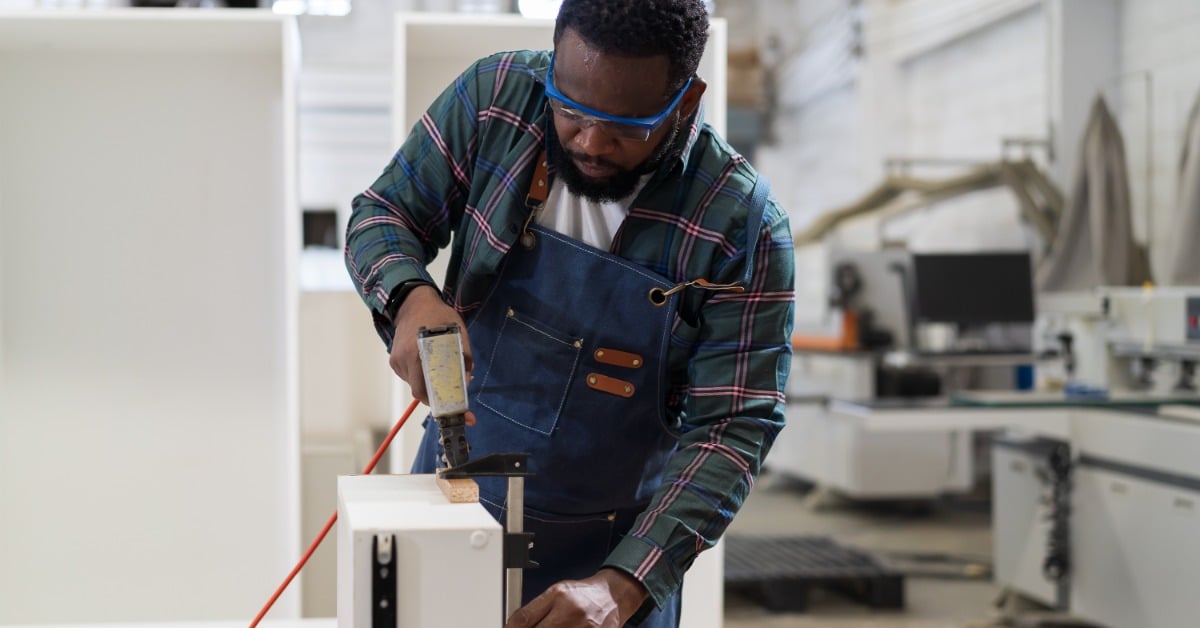
Pneumatic staple guns get blamed for a lot of problems they didn’t cause. Many “air tool issues” actually start with the wrong staples, sloppy air supply, or someone cranking PSI like it’s a volume knob. Once the setup makes sense, these tools feel steady, fast, and honestly pretty low-drama. We will be debunking common myths about pneumatic staple guns that keep floating around, plus the practical fixes that make a pneumatic stapler behave.
Myth: More PSI Always Makes It Work Better
Using higher pressure can drive staples deeper, but it might also dent your materials or punch through thin pieces. The best approach is to use the lowest PSI that sets staples flush without damaging the surface. Always set the PSI using the actual material, since density can vary a lot. If your tool still has trouble, the issue is usually with staple length, airflow, or a worn driver, not too low PSI.
Myth: One Staple Size Covers Every Job
Staple crown, leg length, and wire gauge all matter and affect how clean the finished work looks. Long legs can poke through, curl weirdly, or split thin wood, especially on edges. Short legs can look fine at first, but loosen once the piece flexes or vibrates. Match staples to the material thickness and the task they're meant to do, not just what you have on the shelf.
Myth: Pneumatic Staple Guns Jam Constantly
Most jams happen because of poor staple quality or using the wrong staples for the tool, not because of the tool itself. Cheap staples might be bent, poorly collated, or rough enough to get stuck in the magazine. Mixing staple types that almost fit can also cause feeding problems, especially when working quickly. Use the right staple series for your tool, keep the magazine clean, and jams will be much less common.
Myth: Air Tools Require Constant Maintenance
A pneumatic staple gun doesn’t need babysitting, but it does need basic consistency. Dry, clean air makes a bigger difference than most people expect, especially for seals and valves. Light oiling helps when the tool calls for it, but too much oil can attract dust and gum up moving parts. A simple routine beats random fixes, and it keeps performance steady across shifts.
Where Salco Fits In
A lot of common myths about pneumatic staple guns stick around because teams run mismatched staples, inconsistent PSI, and whatever air setup happens to be nearby. When tools and supplies match the job, stapling feels straightforward and repeatable, even for new operators.
Salco helps businesses choose the right air compressor staple gun, staples, and accessories that fit their materials and daily volume. That means no more guessing on PSI, no more “these staples almost fit,” and way fewer jams and do-overs when the line is moving. Whether the team staples upholstery, packaging, wood assemblies, or insulation, the right setup keeps drives consistent and the finish clean. Check out Salco’s options for building a stapling system that runs smoothly day after day!